Discover the Thrilling Journey of Pinball Machines: From Woodrails to 4K Displays
The pinball machine is more than just a game; it’s a testament to over a century of ingenuity, merging mechanics, art, and technology. It has endured societal bans, technological revolutions, and the rise of video games, emerging today as a sophisticated and vibrant form of entertainment. Understanding the journey of the arcade pinball game not only deepens your appreciation for your own collection but highlights why these machines remain essential cornerstones of the modern game room.
At DMV Pinballs, we live and breathe this evolution, connecting collectors with machines from every era. Join us as we trace the thrilling transformation of pinball, from simple bagatelles to today’s dazzling digital hybrids.
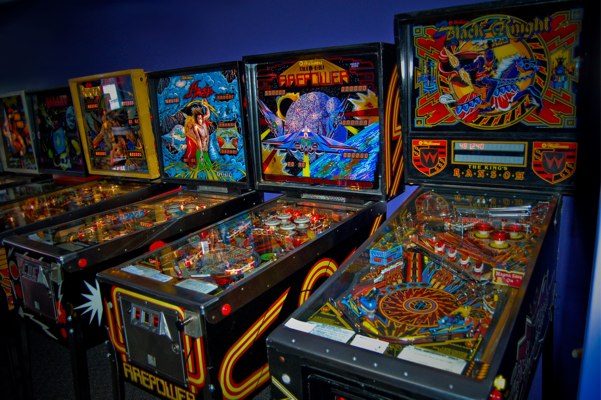
The Early Days: Gambling, Prohibition, and the Birth of the Flipper (1930s – 1947)
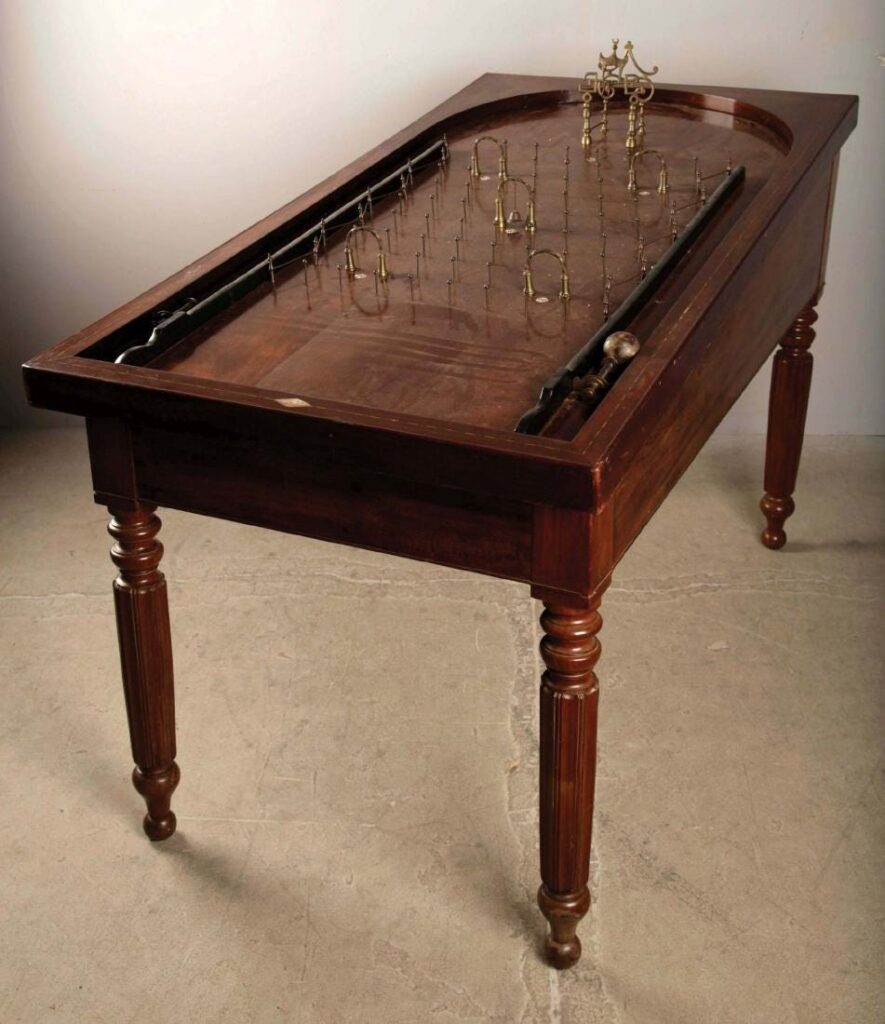
Pinball’s story begins with the simple bagatelle table in the 18th century, but the electric, coin-operated era began in the 1930s. Early machines like Ballyhoo were strictly gravity-driven, relying on plungers and fixed obstacles. Crucially, these early games often awarded cash payouts, leading them to be classified as gambling devices.
This classification led to widespread bans in major U.S. cities, most notoriously New York City, where pinball was outlawed for decades. This period of prohibition spurred a critical design change that saved the industry: the introduction of the flipper. Invented in 1947 with the release of Gottlieb’s Humpty Dumpty, the flipper shifted the game from passive chance to skill-based interaction. This simple addition transformed pinball into a legitimate sport and allowed the machines to slowly creep back into legal favor.
The Electromechanical (EM) Era: Art, Sound, and Scoring (1947 – 1978)
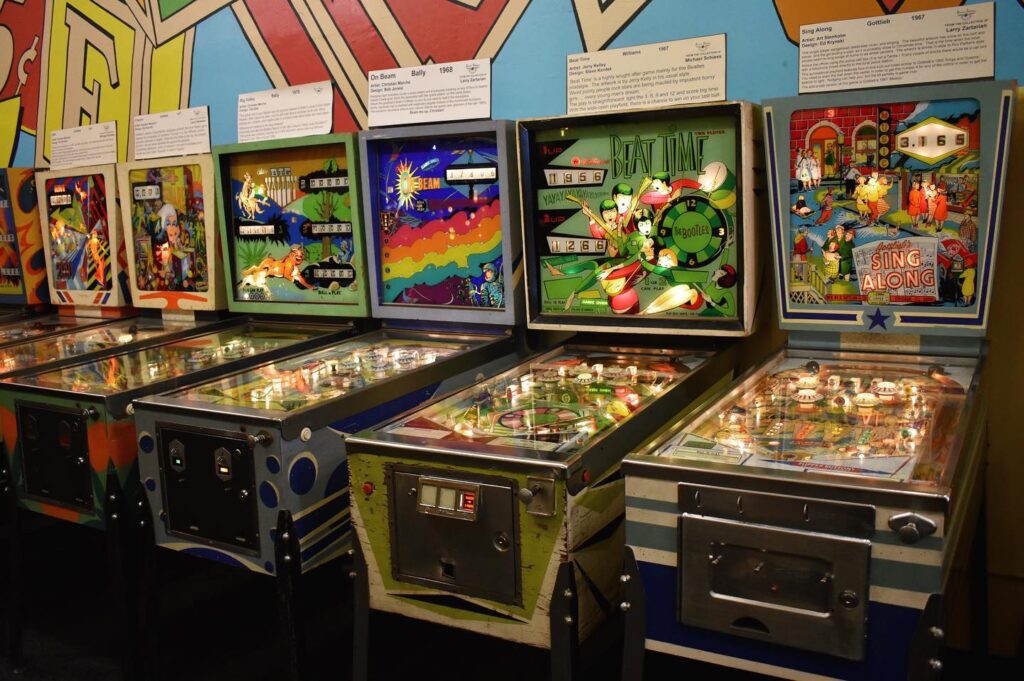
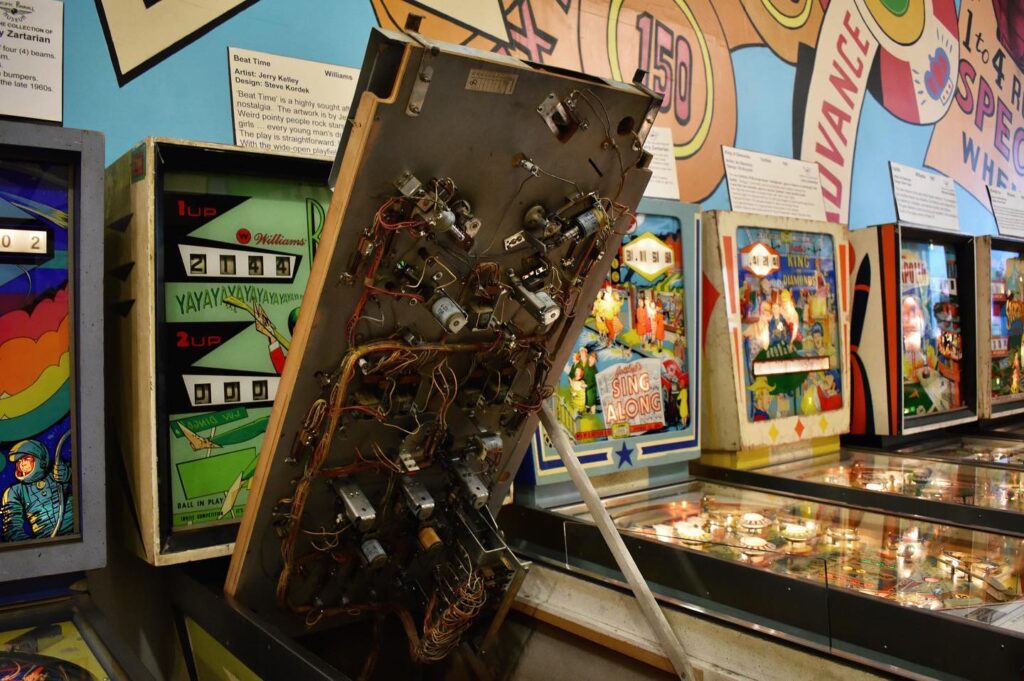
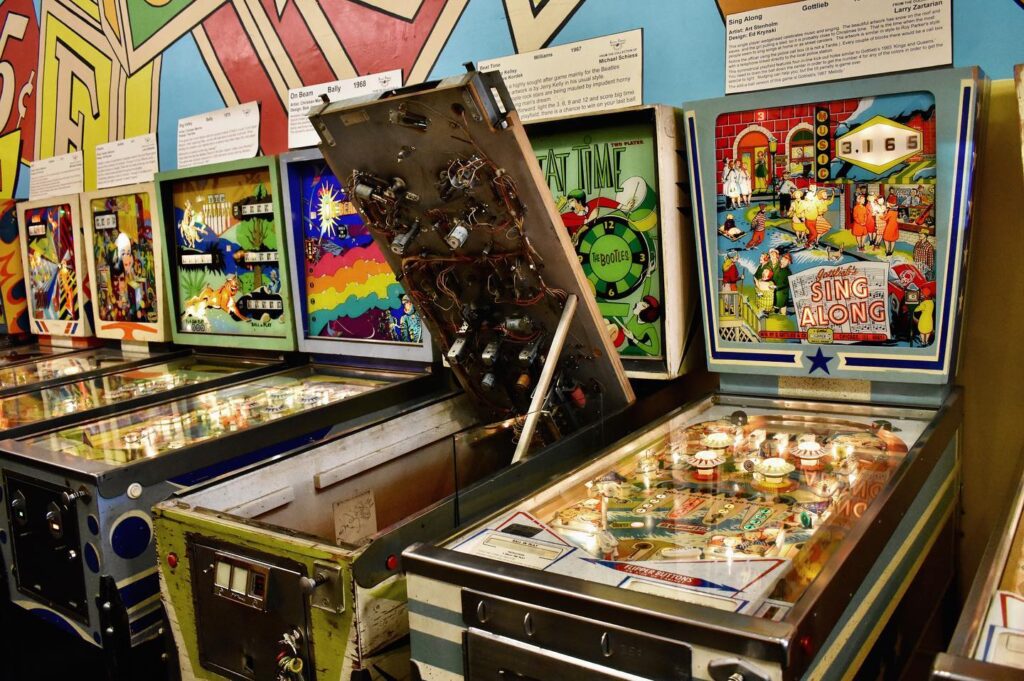
The Electromechanical (EM) era is beloved for its beautiful hand-drawn backglass art and its satisfying, mechanical noises—the clicks, clacks, and bells that are instantly recognizable. During this period, the rules were simple, the playfields were often bare wood, and all scoring and logic were handled entirely by relays, solenoids, and rotating score reels.
Key features of EM pinball machines included:
Additive Scoring: Points were tracked using spinning wheels.
Mechanical Chimes: Sounds were produced solely by strikers hitting tuned metal bars.
Artistic Focus: The playfield and cabinet art were central to the machine’s appeal.
Machines from this era, like The Addams Family (which, while technically later, embodies EM spirit) or classics by Williams and Gottlieb, offer a uniquely nostalgic experience that many enthusiasts seek out today. We often feature beautifully restored EM pinball machines for sale at dmvpinballs.shop, preserving these historical artifacts.
The Solid-State Revolution: CPUs and Digital Sound (1978 – Mid-1990s)
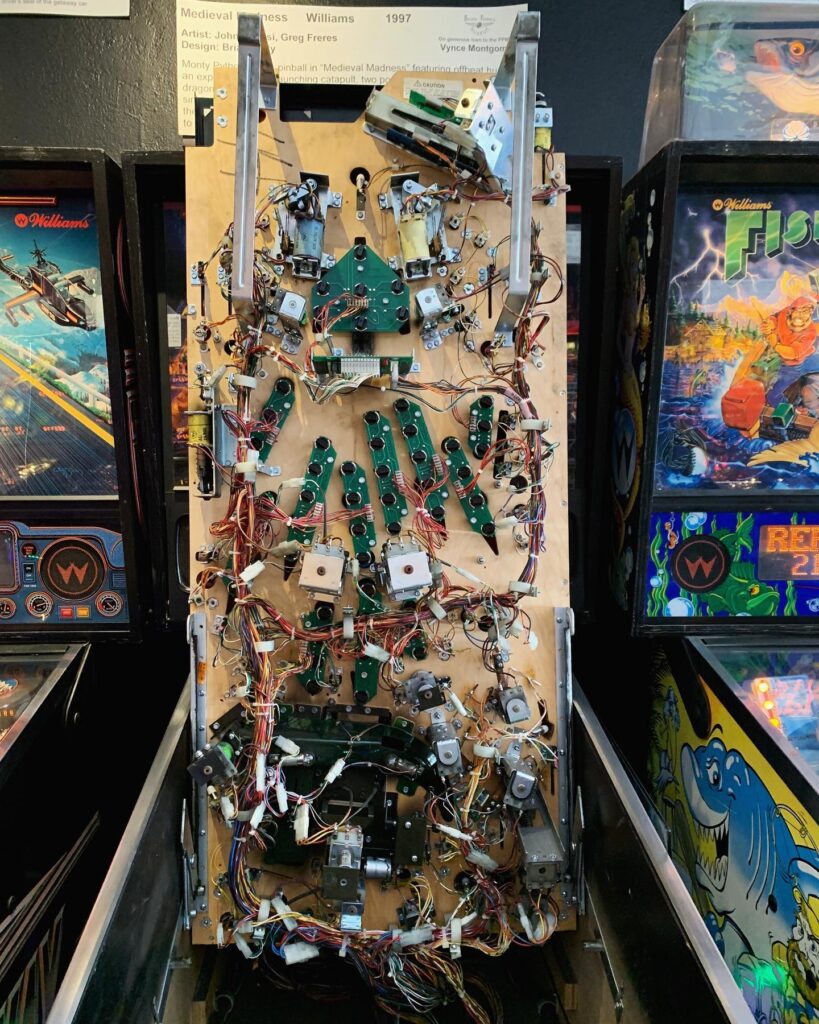
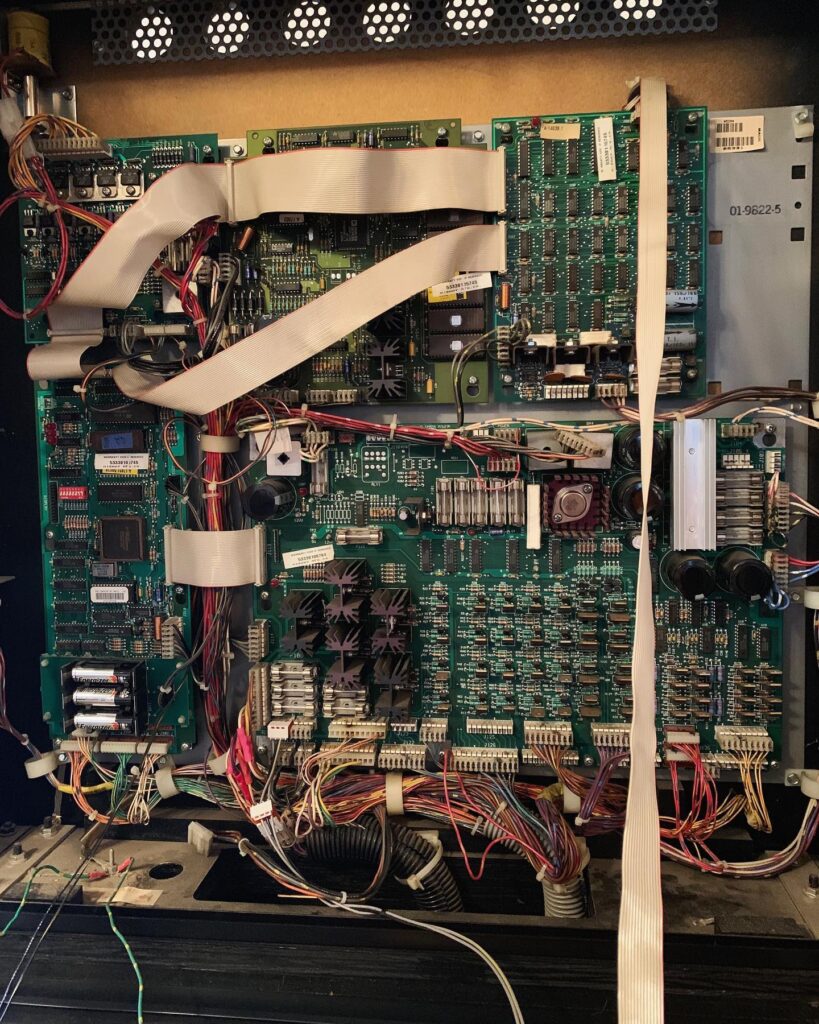
The late 1970s marked pinball’s biggest technological leap: the introduction of computer logic boards (MPUs) and digital scoring. Solid-State (SS) machines replaced complex relays with microprocessors, offering limitless potential for complex rules, speech, digital sound effects, and diagnostic capabilities.
This era produced the game-defining features we take for granted:
Multi-Ball: Machines could manage multiple balls simultaneously, raising the excitement level.
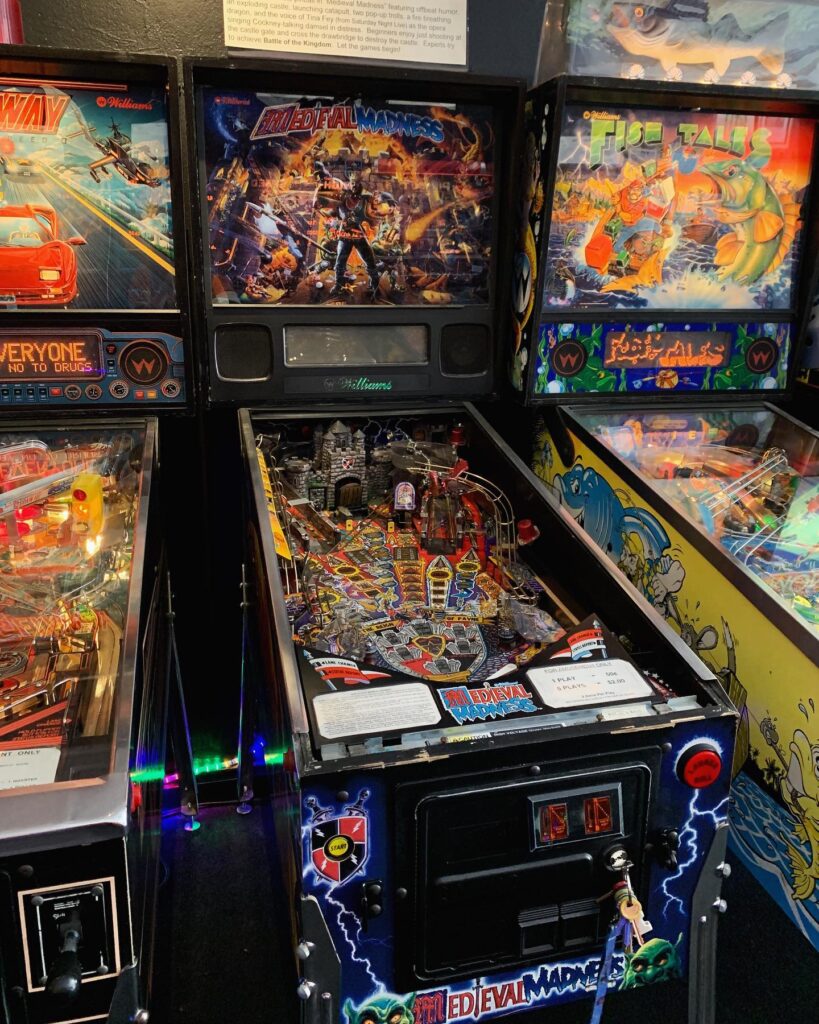
Ramps and Toys: Playfields became three-dimensional with molded plastic ramps, targets that moved, and elaborate “toys” (like the castle in Medieval Madness).
Deep Rules: Games moved beyond simple high scores to incorporate missions, modes, and “Wizard Modes.”
The SS era’s peak, the early 1990s, saw a creative explosion often called the “DMD Era” (Dot Matrix Display), producing some of the highest-grossing and most sought-after arcade pinball games ever created.
Modern Marvels: HD Displays, Deep Integration, and New Audiences (2000s – Present)
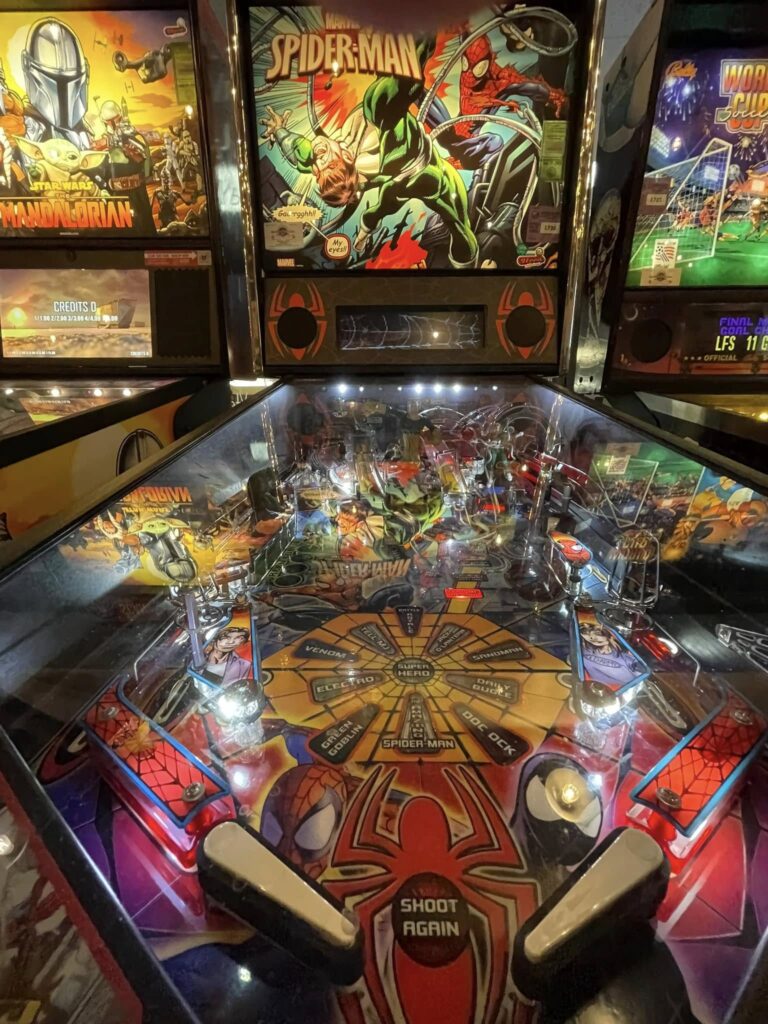
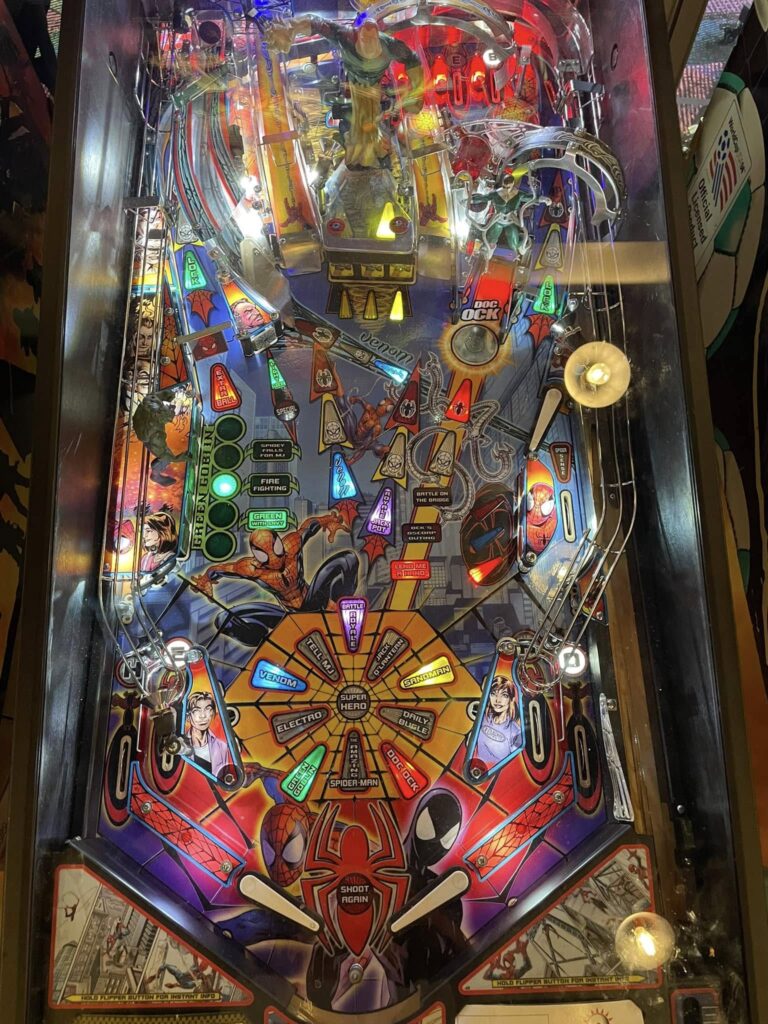
Following the brief “Pinball 2000” experiment and a industry contraction, modern pinball is thriving, led by manufacturers like Stern Pinball. Today’s machines are technological masterpieces that leverage computing power to create immersive, multimedia experiences.
Current generation pinball machines feature:
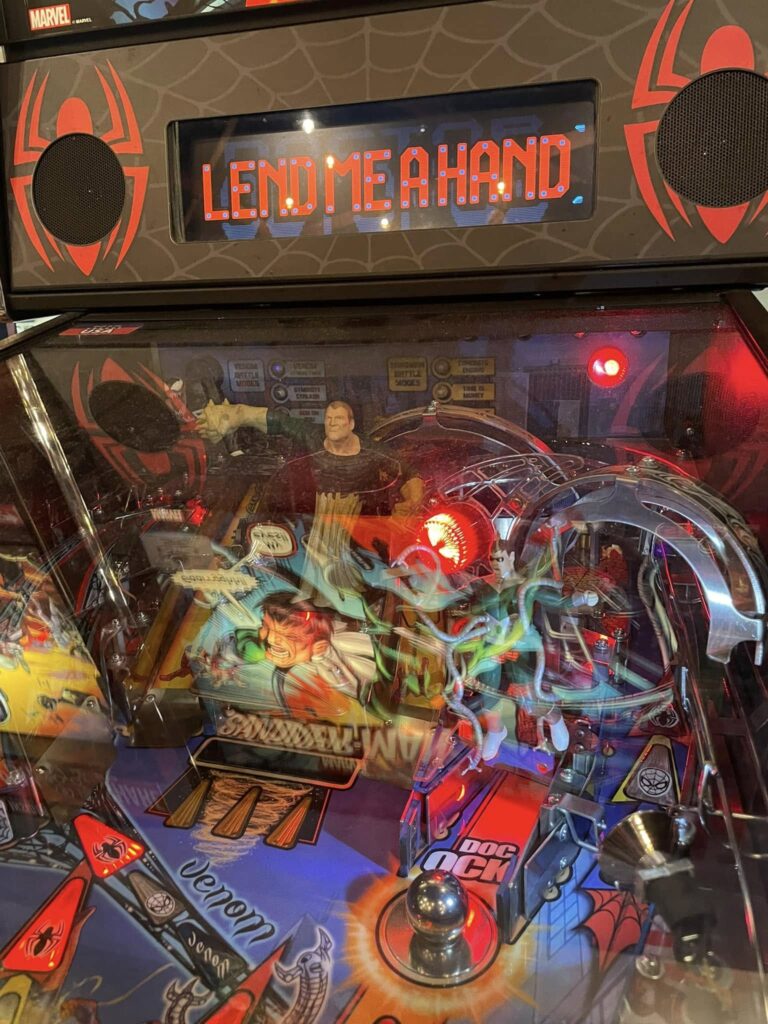
LCD and HD Screens: Replacing the small DMD, these large displays integrate full-motion video, movie clips, and detailed instructions directly into the game.
Incredible Integration: Machines feature Wi-Fi connectivity, stern insider connected features, and deep integration with popular licenses like Marvel, Star Wars, and music bands.
Enhanced Sound: Full stereo sound systems and subwoofers deliver cinematic audio quality.
Custom Lighting: Advanced RGB lighting systems dynamically change color based on the game’s progress, drawing players deep into the theme.
This era continues to prove that pinball is a viable, evolving, and essential part of the modern arcade landscape.
Your Place in Pinball History
Whether you are seeking the mechanical purity of an EM game or the multimedia spectacle of a modern machine, every era of pinball offers a unique challenge and joy. Understanding this history is key to knowing what you are looking for.
If you are looking to start or expand your collection, remember that reliable service is paramount. We not only sell fully guaranteed pinball machines but also offer professional maintenance and on-site pinball machine home service for all eras, ensuring your piece of history is always playing its best.
Ready to secure your own piece of pinball history? Visit dmvpinballs.shop today to browse our current inventory and connect with our service experts!
Frequently Asked Questions (FAQ)
Q: What is the main difference between an EM and an SS pinball machine?
- A: The main difference is the logic. EM (Electromechanical) machines use mechanical relays, score reels, and physical switches to track score and game state. SS (Solid-State) machines use microprocessors (CPUs), similar to a simple computer, to handle logic, sound, and scoring, allowing for far more complex game rules.
Q: Why are 1990s pinball machines so highly sought after?
- A: The early 1990s (the DMD Era) hit a perfect sweet spot. They blended deep electronic rule sets and complex playfield toys with fantastic themes, before production costs drove many major manufacturers out of business. Titles like The Addams Family and Twilight Zone are considered pinnacles of the craft.
Q: What does ‘NIB’ mean when buying pinball machines?
- A: ‘NIB’ stands for “New In Box.” It means the machine is brand new, still in its original shipping box from the manufacturer. When buying NIB machines, ensure you understand the warranty and setup procedures, or ask us about our delivery and setup service!
Q: Are modern pinball machines harder to repair than older ones?
- A: Modern machines are electronically more complex (circuit boards, software updates), but the information and parts are often more readily available than for obscure 1970s titles. Older machines require expertise in mechanical relay systems. Our technicians are trained to service all generations of pinball machines.